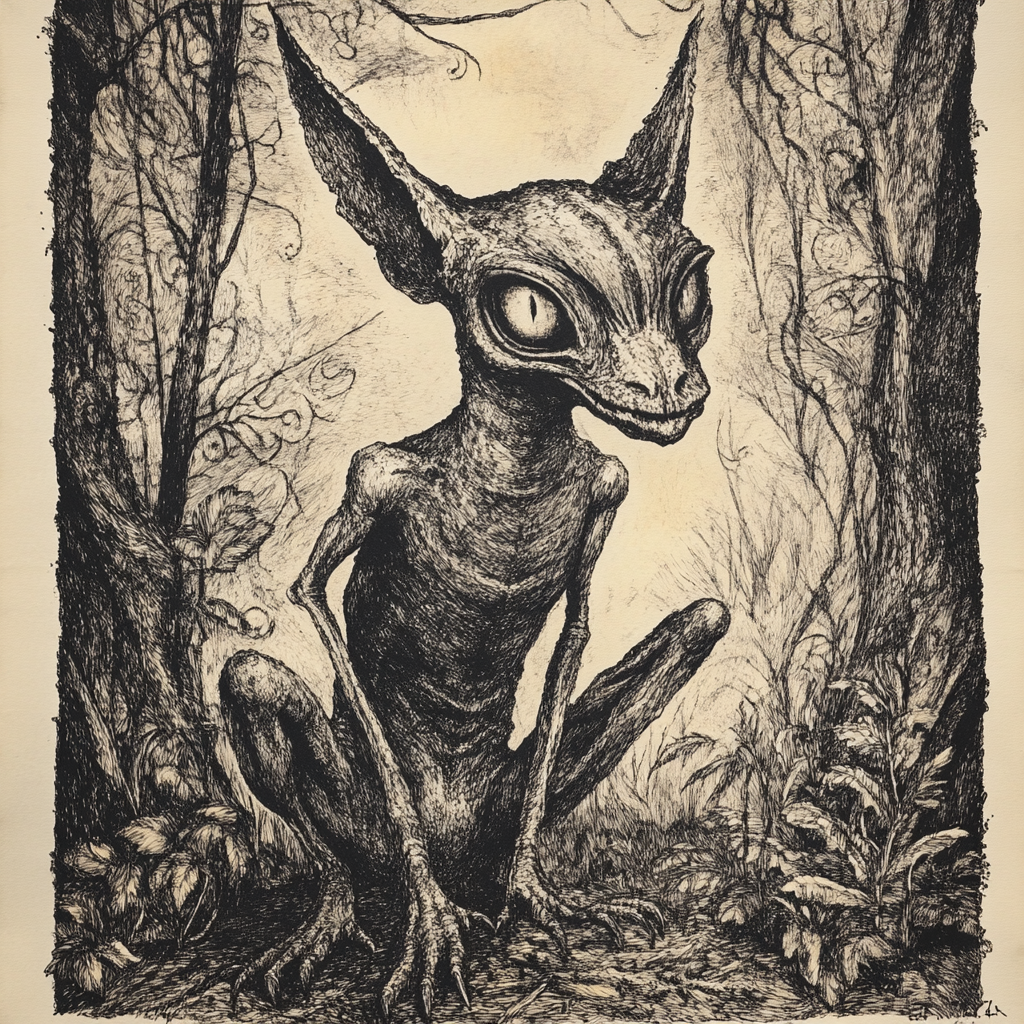
FC-TAPE-682
In March of 1995, Madelyne Tolentino looked out her window in Canóvanas, Puerto Rico and saw something moving through her neighborhood that she couldn’t explain. The creature she described would appear in news reports across the Caribbean within weeks and in newspapers across the Americas within months. Small farm animals were turning up dead across Puerto Rico — goats, chickens, rabbits — with puncture wounds and, according to some accounts, drained of blood. El Chupacabra — literally, “the goat sucker” — had a name before anyone agreed on what it looked like.
The early Puerto Rican Chupacabra looked nothing like the hairless, mangy dog-thing that dominates coverage today. Tolentino described something bipedal: three to four feet tall, with a row of spines running down its back, large oval red eyes, clawed hands, and gray skin. It looked, she said, like something alien. Puerto Rican authorities organized a formal search of the surrounding area. They found nothing.
The First Wave: Puerto Rico, 1995
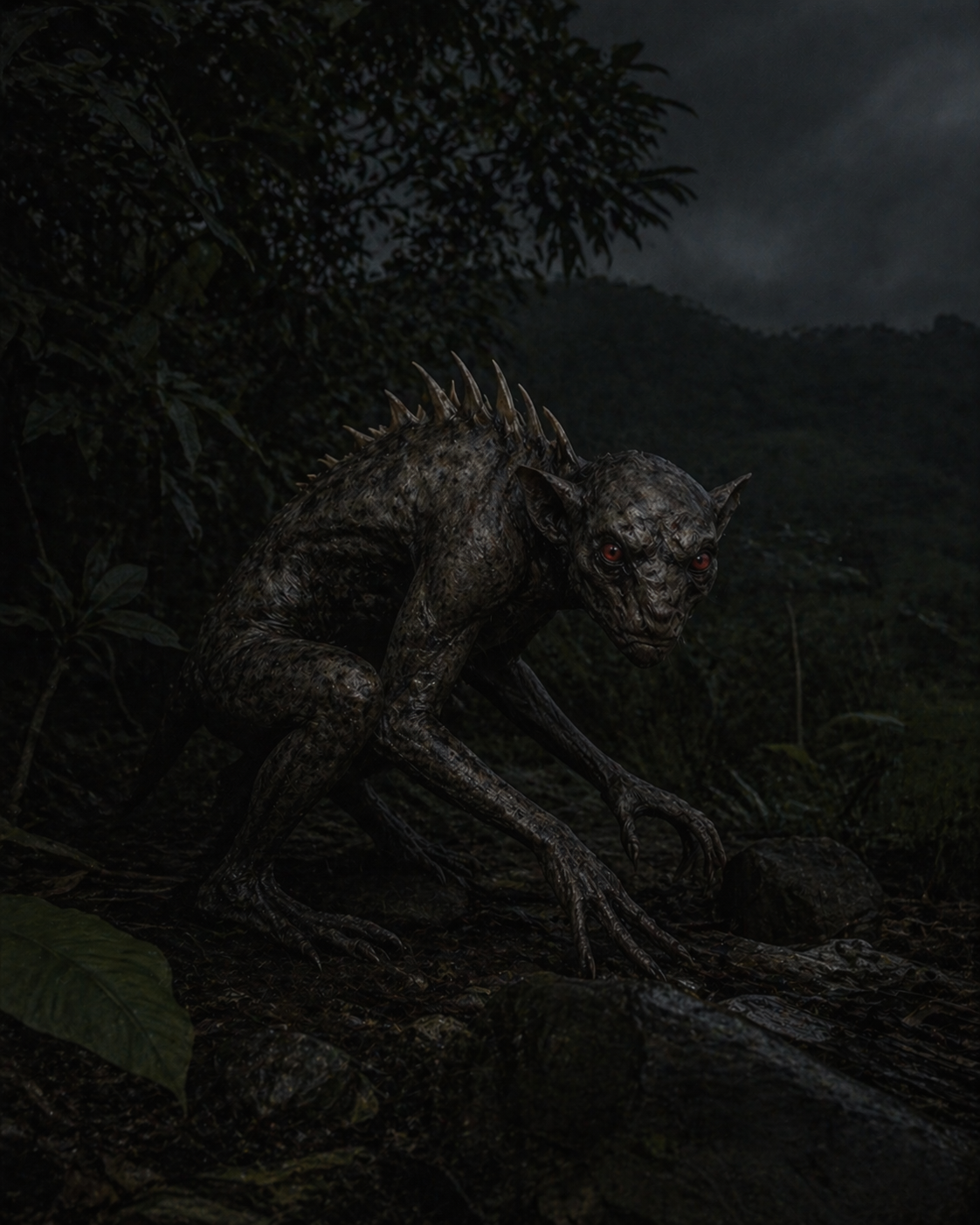
The sightings spread across Puerto Rico through 1995 with unusual speed. By mid-year, Mayor José Soto of Canóvanas had organized civilian hunting parties to pursue the creature, with armed groups searching local forests and caves. Channel 11, a local television station, ran extensive coverage. The governor’s office reportedly received hundreds of reports.
The animal deaths were real. Post-mortem examinations of some livestock confirmed unusual wound patterns — small, circular puncture marks rather than the tearing typical of known predators like mongooses or feral dogs, both present in Puerto Rico. Benjamin Radford, a scientific investigator who later wrote Tracking the Chupacabra (University of New Mexico Press, 2011), documented that several examined carcasses showed conventional predator injuries that had been mischaracterized. He also acknowledged that some early cases had wound patterns that weren’t definitively explained by known animals.
The legend spread from Puerto Rico to Mexico, then to Texas, Chile, Argentina, and Florida. Each regional version adapted the creature’s description. By the time the Texas reports dominated, the Chupacabra had become a quadruped — hairless, with a pronounced spinal ridge and elongated snout — that ran rather than crept.
The Texas Chupacabra
Beginning in the early 2000s, a string of unusual animal carcasses found in Texas drew media attention. In 2004, a rancher in Elmendorf caught footage of an unfamiliar animal he believed was responsible for killing his livestock. The creature was thin, nearly hairless, and moved with an unusual gait. Biologists from Texas State University later examined a captured specimen in 2007 and identified it as a coyote with severe sarcoptic mange — a mite infestation that causes heavy hair loss, thickened skin, and the kind of physical distortion that makes the animal almost unrecognizable.
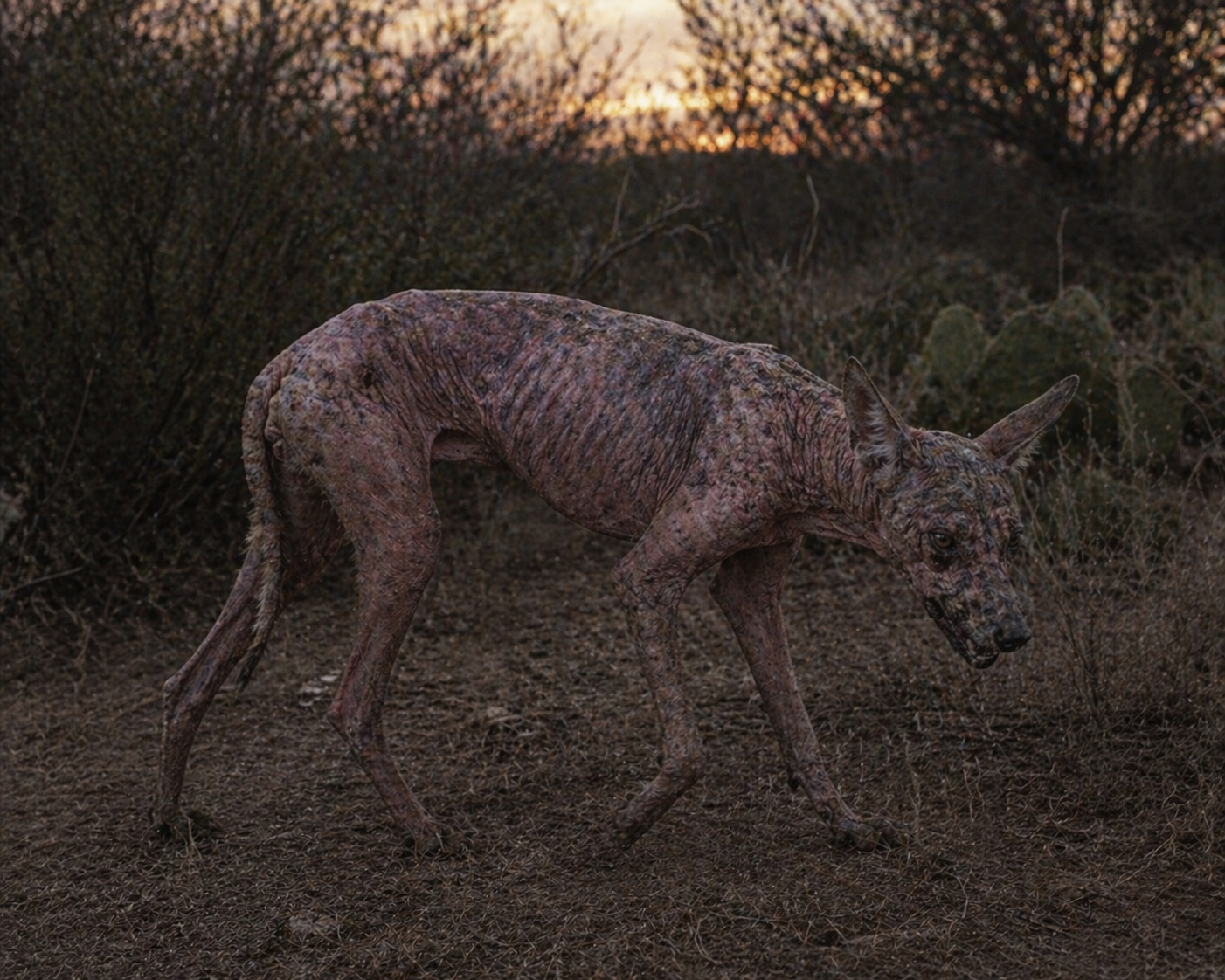
The mange explanation became the consensus scientific position. It accounts for the appearance, for behavioral changes (mange-infected coyotes become desperate and approach livestock because they’re too ill to hunt effectively), and for why “Chupacabra” sightings cluster in years and regions where coyote mange outbreaks are documented.
But mange doesn’t explain Puerto Rico. Coyotes aren’t native to Puerto Rico. The 1995 creature Tolentino and others described was bipedal and had features no coyote — healthy or diseased — could produce.
Two Different Creatures
This is the part most Chupacabra coverage glosses over: there appear to be two completely separate legends that got collapsed into one.
The original Puerto Rican Chupacabra, described in 1995, was bipedal and reptilian in appearance, and left unusual puncture wounds on livestock. The Texas and continental Chupacabra is a quadruped that almost certainly represents misidentified mange-infected canids. The two creatures share a name and a reputation for livestock predation. Beyond that, the descriptions don’t match.
Radford’s investigation found that Madelyne Tolentino’s description closely matched a creature from the 1995 film Species — a science fiction movie featuring an alien-human hybrid with a spinal ridge and large eyes — which had played in Puerto Rico shortly before the sightings began. Tolentino confirmed she had seen the film. Radford argued this was the source of the bipedal description, propagated through community reports.
Critics of his conclusion note that livestock deaths with unusual wound patterns preceded widespread discussion of the film in some documented timelines. The sequencing is disputed.
What the Evidence Shows
No confirmed biological specimen of anything matching the original Puerto Rican Chupacabra has been produced. The Texas mangy coyote is real and documented. Whether it’s the only explanation for all the reports is a harder question.
Cattle and goat mutilations with unusual wound patterns have been reported across the Southwest and Latin America independently of the Chupacabra narrative — often attributed to natural predators, occasionally leaving marks that don’t match known animals cleanly. These reports predate the 1995 Puerto Rico outbreak and continue to surface periodically.
The two-version problem is the thing that keeps the case open. If the mangy coyote explains Texas, it doesn’t close Puerto Rico. And if Puerto Rico was a film-seeded mass hysteria, that doesn’t explain what was killing the livestock before Tolentino’s sighting made the news. Both explanations are partial. Neither one closes the file.