FC-TAPE-348
The Greek sirens were not fish. They were birds. The confusion between sirens and mermaids isn’t a minor linguistic mistake — it’s a transformation that happened over more than two thousand years, driven by overlapping myths, medieval scribes working from imperfect sources, and the human tendency to collapse similar-sounding legends into one. Tracking how it happened reveals something real about how folklore evolves and mutates.
What the Original Sirens Were
In Homer’s Odyssey, written sometime in the 8th century BCE, sirens appear in a brief but precisely described scene. Odysseus has been warned about them by Circe: they sit on an island surrounded by the rotting bodies of men who stopped to listen. They sing. Their song promises knowledge — specifically, that they know everything that happens in the world. Odysseus has himself tied to the mast and orders his crew’s ears stopped with wax. He hears the song. He survives.
Homer never describes what they look like. He gives them voices and an island and dead men. That’s the entire physical description.
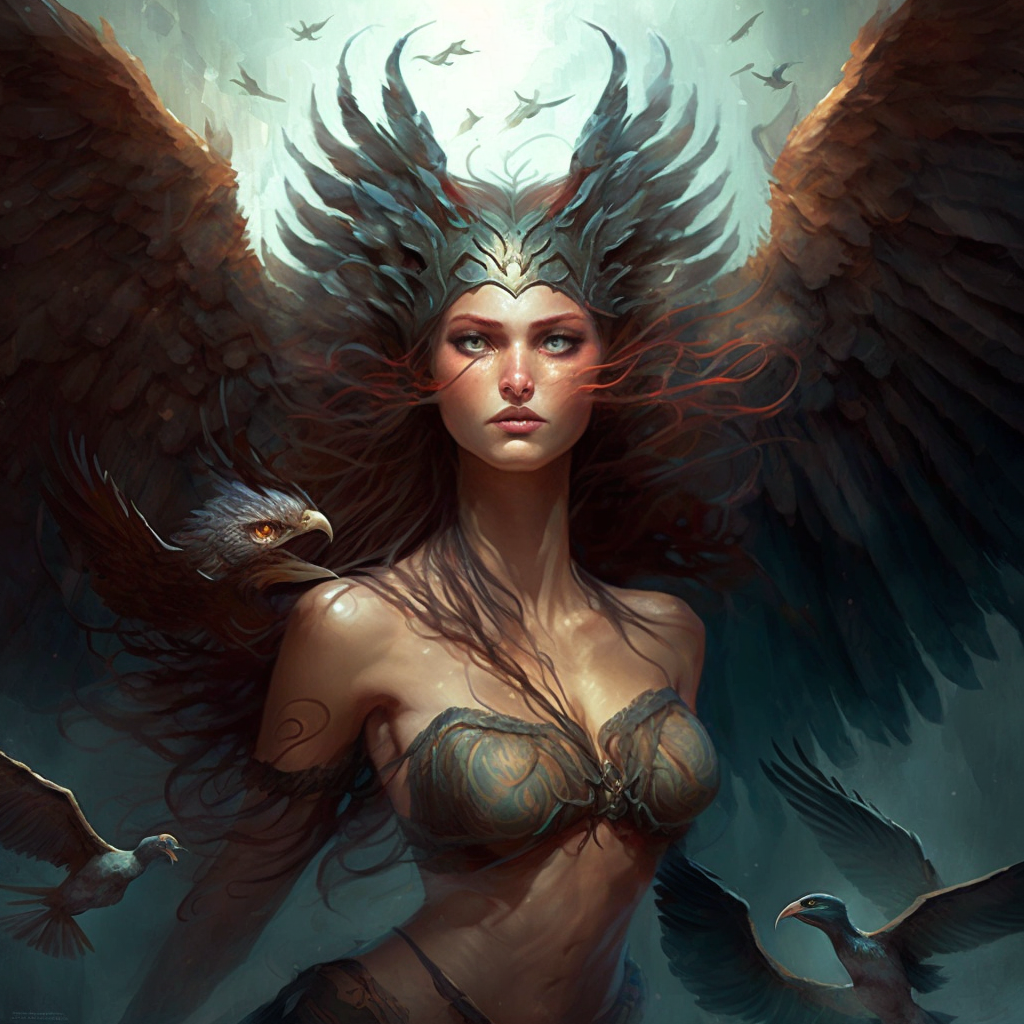
The bird-woman image comes from later Greek sources. Vase paintings from the 6th and 5th centuries BCE consistently depict sirens as birds with human heads — sometimes female faces, sometimes bearded. They appear as funeral figures in Greek art, associated with death and the transition to the underworld. The siren in early Greek iconography isn’t a seductive temptress; it’s something closer to a psychopomp — a guide to the dead.

The Shift Begins
The transition to fish-tailed sirens begins in the medieval period, and the mechanics of how it happened are documented. Latin scribes translating Greek sources sometimes confused the siren with other sea creatures, particularly after Roman writers began blending Greek myth with other Mediterranean traditions.
The Physiologus, a Christian allegorical bestiary written in Greek sometime between the 2nd and 4th centuries CE, describes sirens as half-woman, half-fish — almost certainly drawing on traditions about sea spirits that had merged with the siren story. The Physiologus was enormously influential across medieval Europe, translated into dozens of languages, and it was this version — the fish-tailed siren — that entered the mainstream of Western imagination.
By the time medieval bestiaries were circulating in the 12th and 13th centuries, many European readers encountered “sirena” as a fish-woman. The earlier bird-woman version was either unknown to them or treated as a separate creature. The confusion was locked in.
Where Mermaids Come From Separately
Mermaid traditions didn’t simply descend from Greek sirens. They were parallel developments that eventually merged with the siren story.
The Assyrian goddess Atargatis is one of the earliest documented fish-woman figures, worshipped in ancient Syria from at least the 9th century BCE. According to one version of her myth, she transformed herself into a fish after accidentally killing her mortal lover, but was only able to maintain the transformation from the waist down. She was associated with water, fertility, and the underworld.
European mermaid traditions exist independently across cultures. The Scottish selkie — a seal-person who can shed its skin — is a distinct legend. The Irish merrow is another. Scandinavian folklore has the hafgygr, a sea-giantess with fish characteristics. None of these derived from Greek sirens. They were regional traditions that, through trade routes and the standardization of medieval European culture, began to be categorized together.
The Convergence

By the 14th and 15th centuries, the terms siren and mermaid were being used interchangeably in much of Western Europe, despite referring to creatures with different origins, different physical forms, and different mythological functions. A 1430 illustration from a German manuscript labels a clearly fish-tailed figure as a “siren.” A 1485 edition of the Speculum Humanae Salvationis depicts sirens as fish-women in what was intended as a moral allegory.
The word “siren” in many European languages had simply come to mean “sea woman with a fish tail” by the time the Age of Exploration began. When Portuguese sailors reported seeing something strange in coastal West African waters in the 16th century and called it a “sereia,” they were using a word that already meant mermaid in their language.
Christopher Columbus reported seeing “sirens” off the coast of Hispaniola in January 1493 and noted they were not as beautiful as people said. Marine biologists now believe he was looking at manatees.
What the Two Creatures Actually Shared
The merger made a kind of sense because sirens and sea-women had always shared key features: allure, song, the capacity to lure men to their deaths. The Greek siren did it from a rocky island; the mermaid did it from the water. Both figures were associated with the sea. Both were feminine. Both were dangerous.
The difference — bird versus fish, island versus ocean floor — was significant in their original cultural contexts but collapsed easily under the pressure of transmission. Medieval Europe received both legends through imperfect translations and blended them because they were close enough to seem like the same thing.
What Remained Distinct
The two versions coexisted in specialized literature even as the fish-woman became dominant in popular culture. Renaissance scholars who read Greek and Latin carefully kept the distinction alive. In the 17th century, Athanasius Kircher published detailed classifications of both types in his encyclopedic works on natural history.
In modern usage, “siren” carries both meanings depending on context. In marine biology, Sirenia — the order that includes manatees and dugongs — is named for the fish-woman version. In mythology and classical studies, “siren” typically refers to the bird-woman of the Odyssey.
The Disney version — red hair, fish tail, beautiful voice, no murderous intent — is essentially a mermaid wearing the siren’s reputation. The actual sirens of Homer’s poem were promising sailors something far more disturbing than beauty. They were offering complete knowledge of history. Their song was a trap built from information, not attraction.
The transformation took two thousand years. It involved scribes, theologians, medieval bestiary authors, and a Roman-era Greek text about animal symbolism. And it began because Homer never bothered to say what they looked like.